You don’t need a big budget to create a patio you’ll love spending time in. With a little creativity, even simple and affordable pavers can make your outdoor space look inviting and stylish.
Whether you’re planning a small makeover or starting from scratch, there are plenty of budget-friendly options to try.
The right pavers can make a big difference in how your patio looks and feels. From recycled and budget-friendly materials to simple patterns and creative layouts, you can find options that suit your style without spending a fortune.
Even small details, such as adding outdoor furniture, plants, or warm lighting, can make an affordable patio feel more complete and comfortable.
In this guide, we’ll explore practical and inexpensive patio paver ideas that work for different outdoor spaces and budgets.
Whether you prefer a clean modern look, a cozy rustic style, or something simple and functional, these ideas can help you create a patio that feels inviting while keeping your costs under control.
17 Cheap Patio Paver Ideas
A patio doesn’t need a huge budget to look great. With the right materials and a bit of DIY effort, you can build a durable, attractive outdoor space for a fraction of the cost of professional installation. Here are 17 budget-friendly paver ideas to consider.
1. Gravel-Set Concrete Pavers
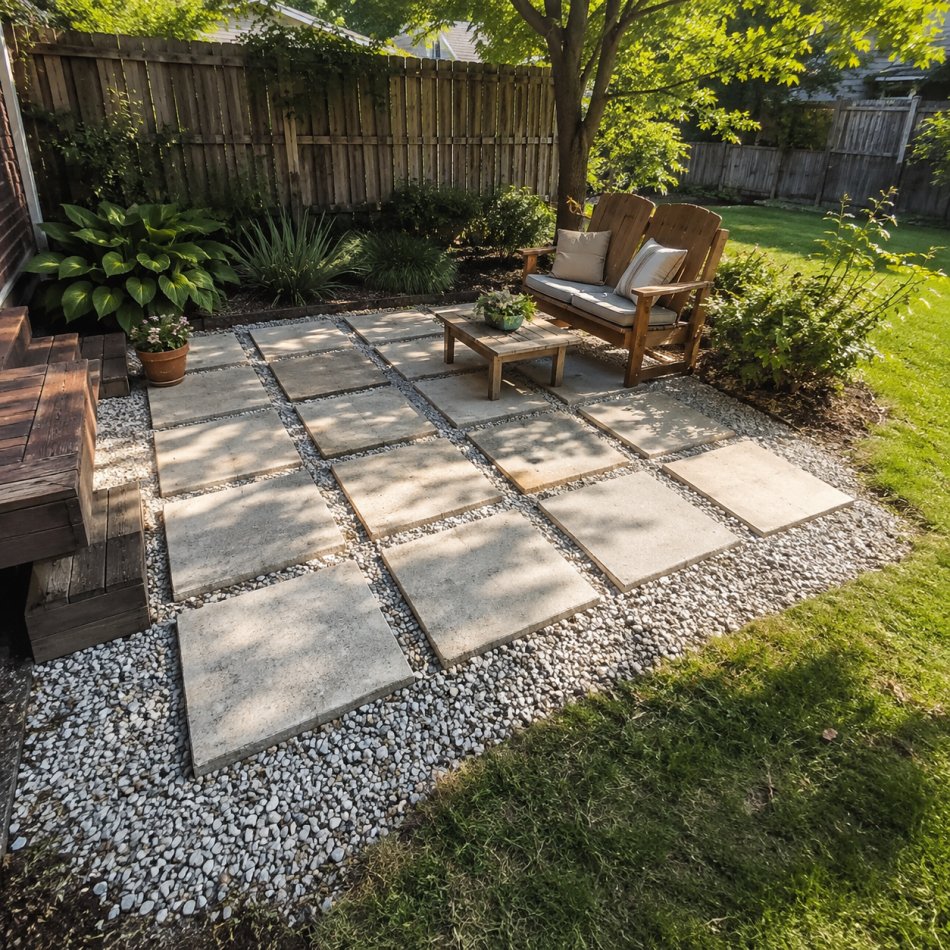
Skip the mortar and sand base — set basic concrete pavers directly into a bed of compacted gravel. It’s one of the cheapest and easiest DIY methods, and it still gives you a clean, level surface.
Gravel-set concrete pavers are also a great choice if you want a patio that is simple to maintain and easy to adjust later. You can arrange the pavers in a straight grid, staggered pattern, or other simple layout depending on your space.
Adding a few plants, outdoor chairs, or a small table around the area can make the patio feel more welcoming without adding much to the overall cost.
2. Pea Gravel with Paver Stepping Stones
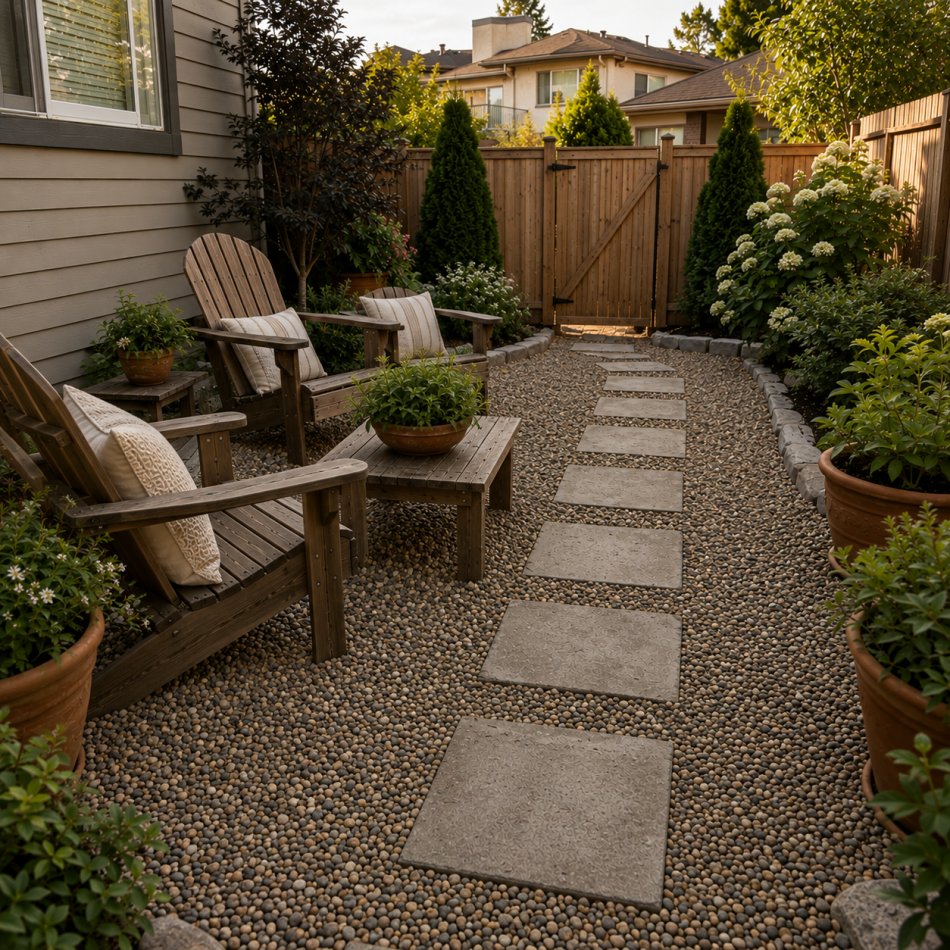
Combine inexpensive pea gravel as the main “flooring” with a few larger paver stones as a walking path through the seating area. This cuts material costs dramatically since gravel is far cheaper than solid pavers per square foot.
This combination also gives your patio a relaxed, natural appearance while making the space feel more open. Choose pavers in a simple colour that complements the pea gravel, and leave enough space between each stepping stone for comfortable walking.
A few low-maintenance plants, a small outdoor seating set, or solar lights can add extra charm without requiring a large investment.
Also Read: 19 Small Apartment Fall Decor Ideas to Transform Your Space
3. Reclaimed Brick Pavers
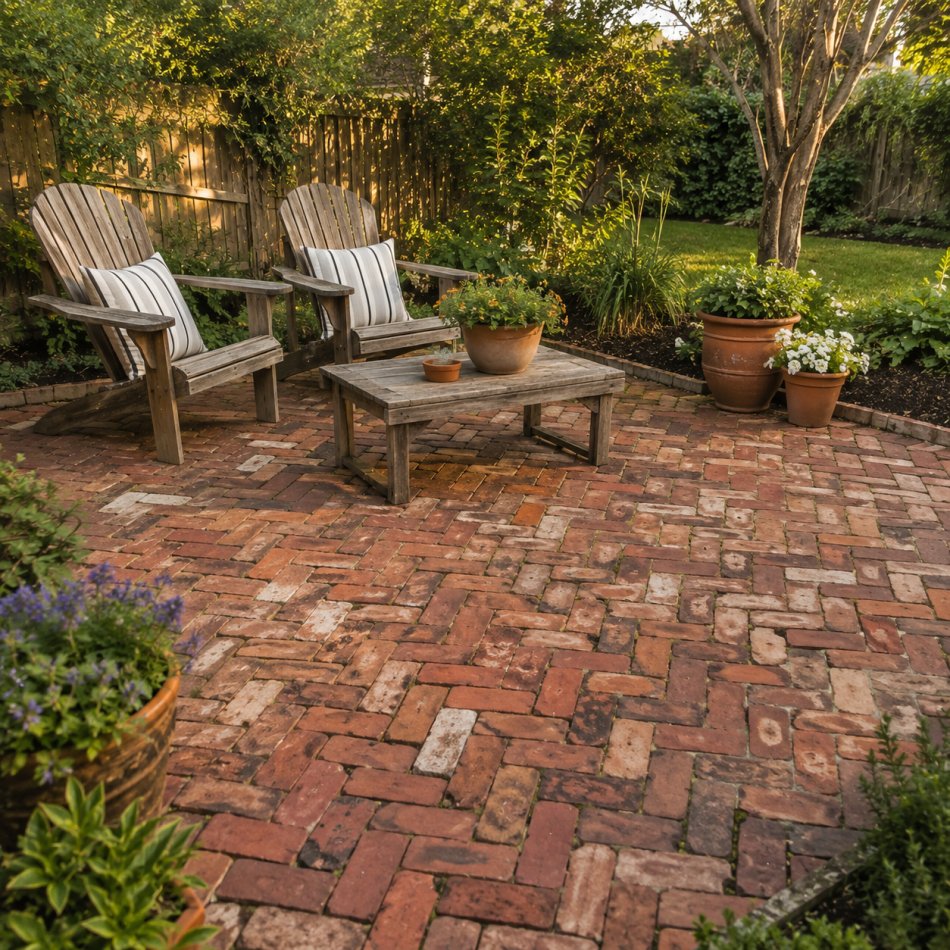
Salvaged or reclaimed bricks from demolition sites, salvage yards, or online marketplaces can be had for a fraction of new brick prices — and they bring rustic character new materials can’t match.
Reclaimed bricks can be arranged in simple patterns such as running bond, herringbone, or basket weave to create a unique patio surface.
Because each brick may have slightly different colors, textures, and signs of age, the finished space gets a warm, lived-in look.
Before using them, check that the bricks are sturdy and suitable for outdoor use, then clean them well to give your patio a neat and finished appearance.
4. Broken Concrete (“Urbanite”) Patio
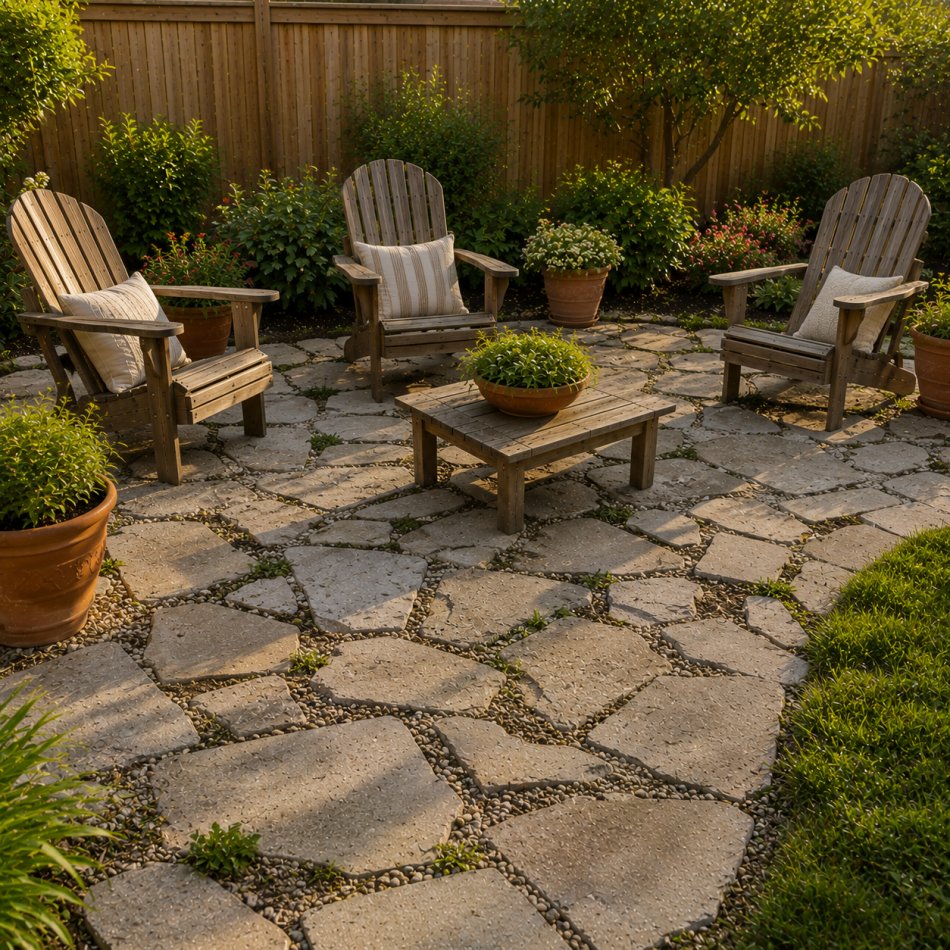
Repurpose old, broken concrete slabs (often free from demolition projects) as irregular flagstone-style pavers. Arrange the pieces like a puzzle for a mosaic look that costs next to nothing but labour.
The uneven shapes of urbanite can give your patio a unique, natural appearance that is difficult to achieve with standard pavers. You can fill the gaps with gravel, sand, or low-growing ground cover to create a finished look and add visual interest.
For a more polished result, choose pieces with similar thicknesses and arrange them carefully so the walking surface remains as even and comfortable as possible.
5. Basic Grey Concrete Pavers
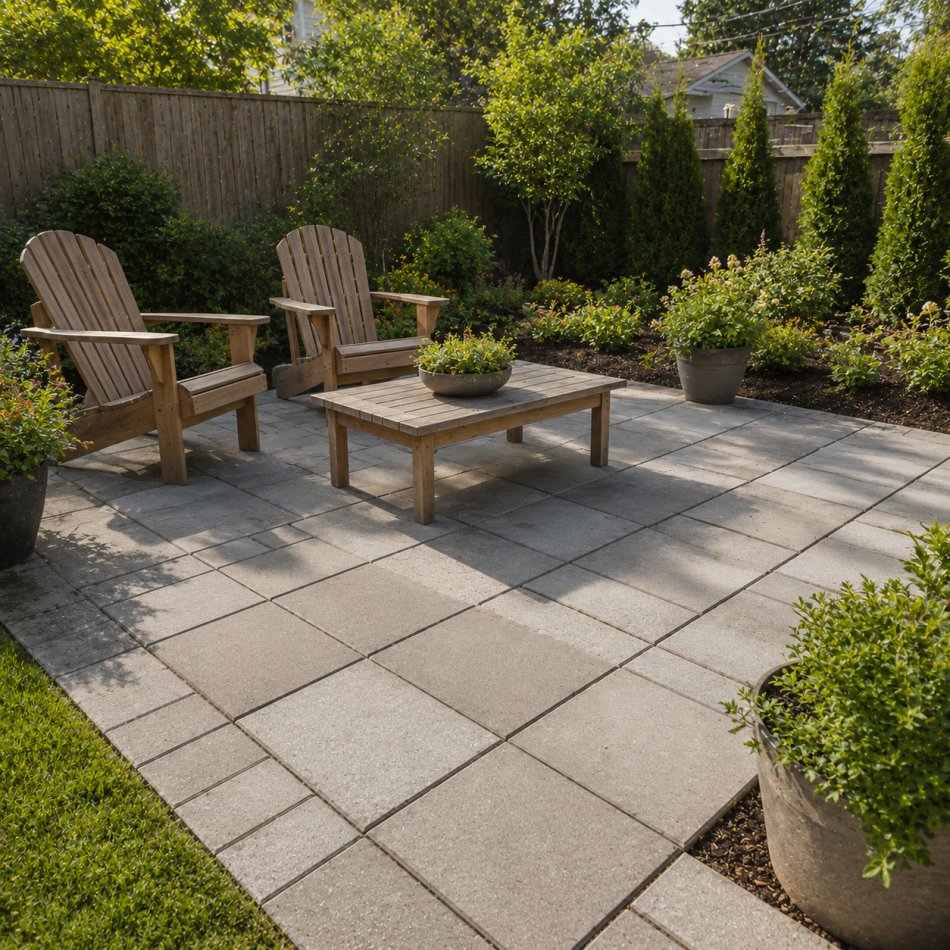
The standard square or rectangular grey concrete paver is the least expensive manufactured paver option at most home improvement stores. Simple, but effective when laid in a clean grid pattern.
Grey concrete pavers are also easy to work with because their neutral color pairs well with almost any outdoor style. You can soften their simple appearance by adding colorful outdoor cushions, potted plants, or warm lighting around the patio.
For an even more interesting design, consider mixing different paver sizes or adding a simple border around the edges without significantly increasing the overall cost.
6. Pallet Wood Deck Tiles Alternative
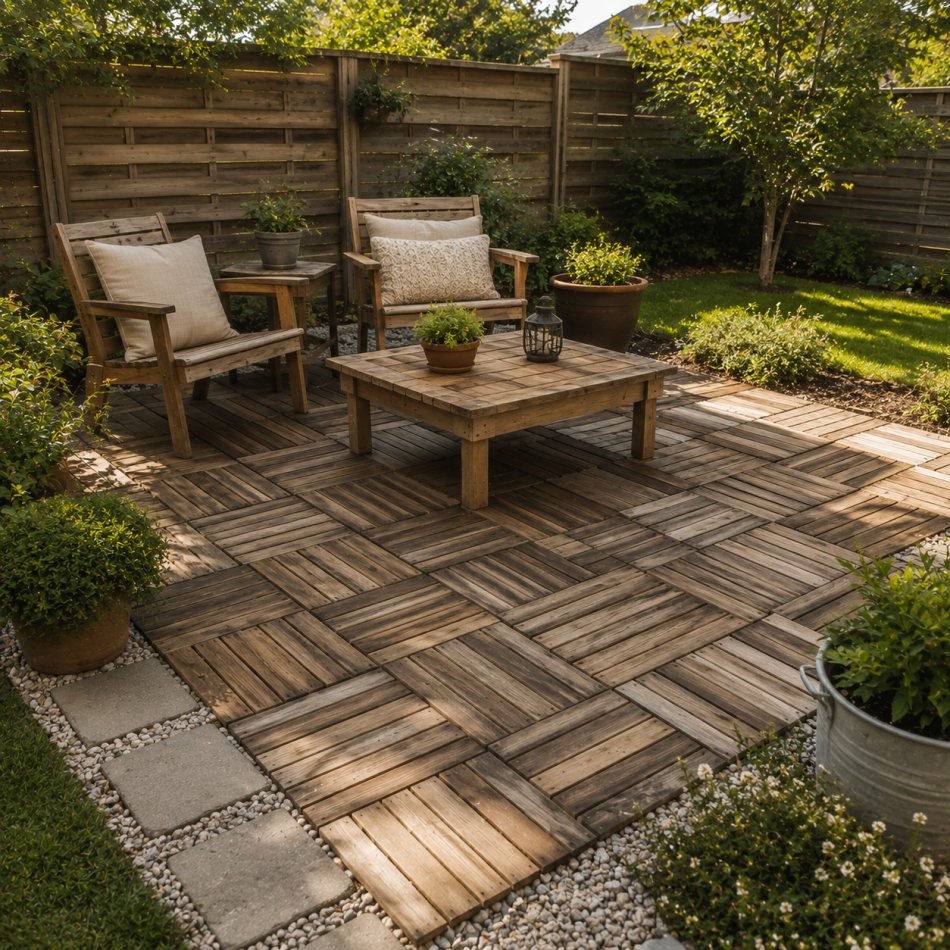
Not a paver in the traditional sense, but interlocking wood deck tiles made from pallet wood can be laid over a budget paver base to add warmth without the cost of a full deck.
This option works especially well for small patios, balconies, or seating areas where you want a warmer and more natural feel.
Arrange the tiles in a simple grid and leave enough space for proper drainage and airflow underneath. Since pallet wood can vary in quality, use clean, sturdy pieces that are suitable for outdoor use and protect them with an appropriate exterior wood finish.
7. Rubber Paver Tiles
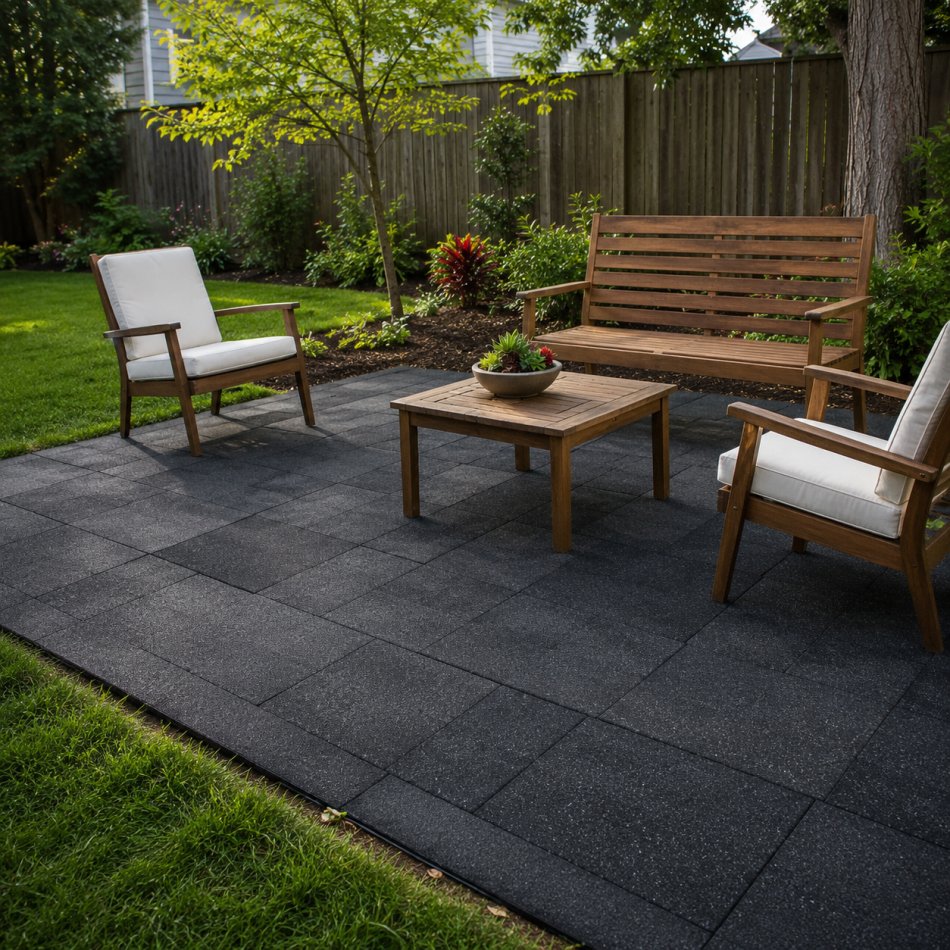
Recycled rubber pavers are lightweight, affordable, and easy to install without professional help. They’re especially good for softening a play area or gym-style outdoor space.
Rubber paver tiles are also comfortable underfoot and can provide better cushioning than hard concrete surfaces. They come in different colours, shapes, and textures, making it easy to create a simple design that suits your outdoor space.
Their low-maintenance surface can be a practical choice for families looking for an affordable patio or activity area that is easy to clean and maintain.
8. Single-Color Interlocking Concrete Pavers
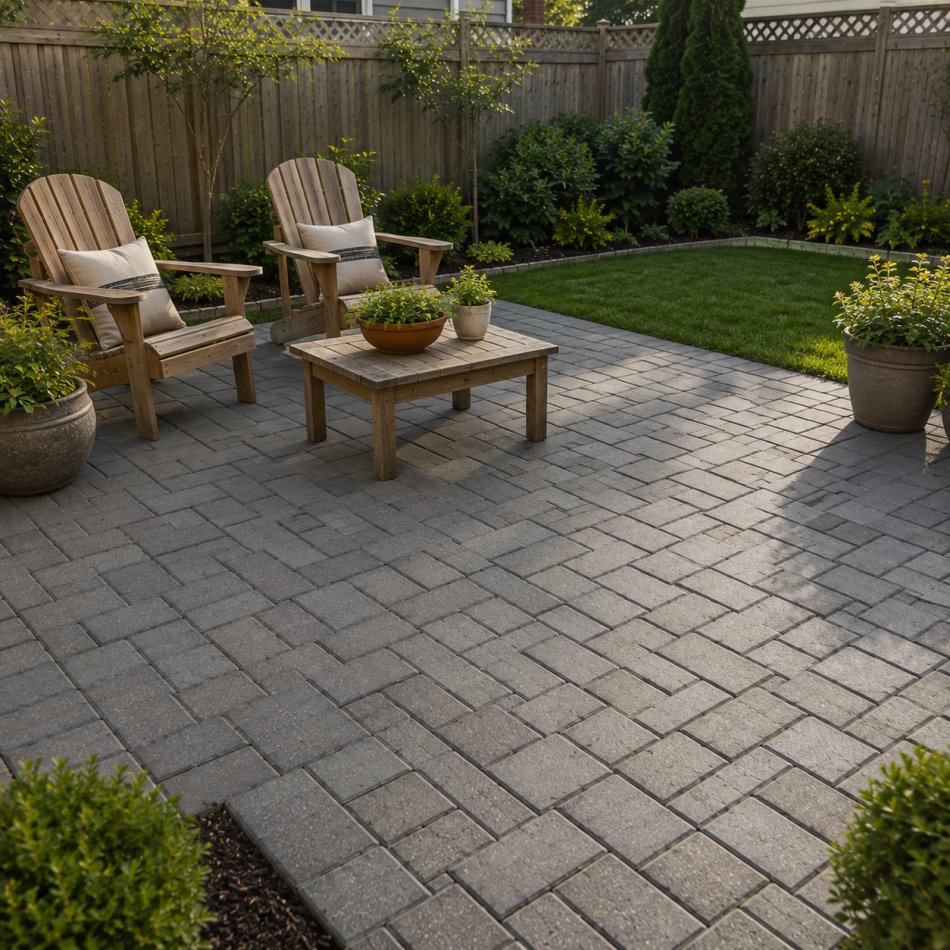
Buying one basic interlocking paver style in bulk is cheaper than mixing colours and shapes. Simplicity in material choice keeps costs down while still giving a polished, uniform look.
A single-color design can also make a small patio look more spacious and organized. You can create visual interest by changing the laying pattern, such as using a running bond, basketweave, or simple grid.
Adding a contrasting border with a small number of different pavers can also define the space while keeping the overall project budget-friendly.
9. Paver Chips and Remnants
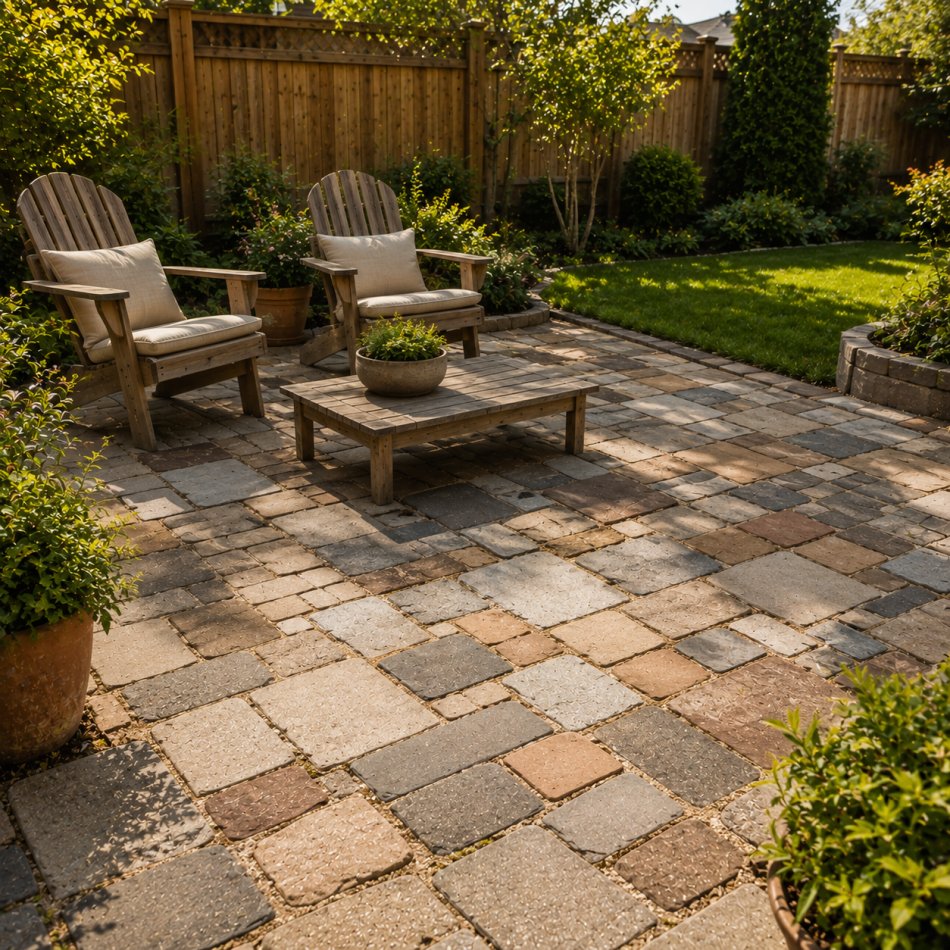
Many suppliers sell “seconds” or leftover/discontinued paver stock at a steep discount. If you don’t mind a slightly mismatched look, this can cut material costs by 50% or more.
These discounted pieces can be especially useful for small patios, borders, pathways, or accent areas where you don’t need a large quantity of matching pavers.
You can mix similar shades and sizes to create a casual, custom pattern instead of trying to make everything perfectly uniform. Before buying, check the pieces for cracks or damage and make sure you have enough material to complete your planned design.
10. Sand-Set Flagstone Fragments
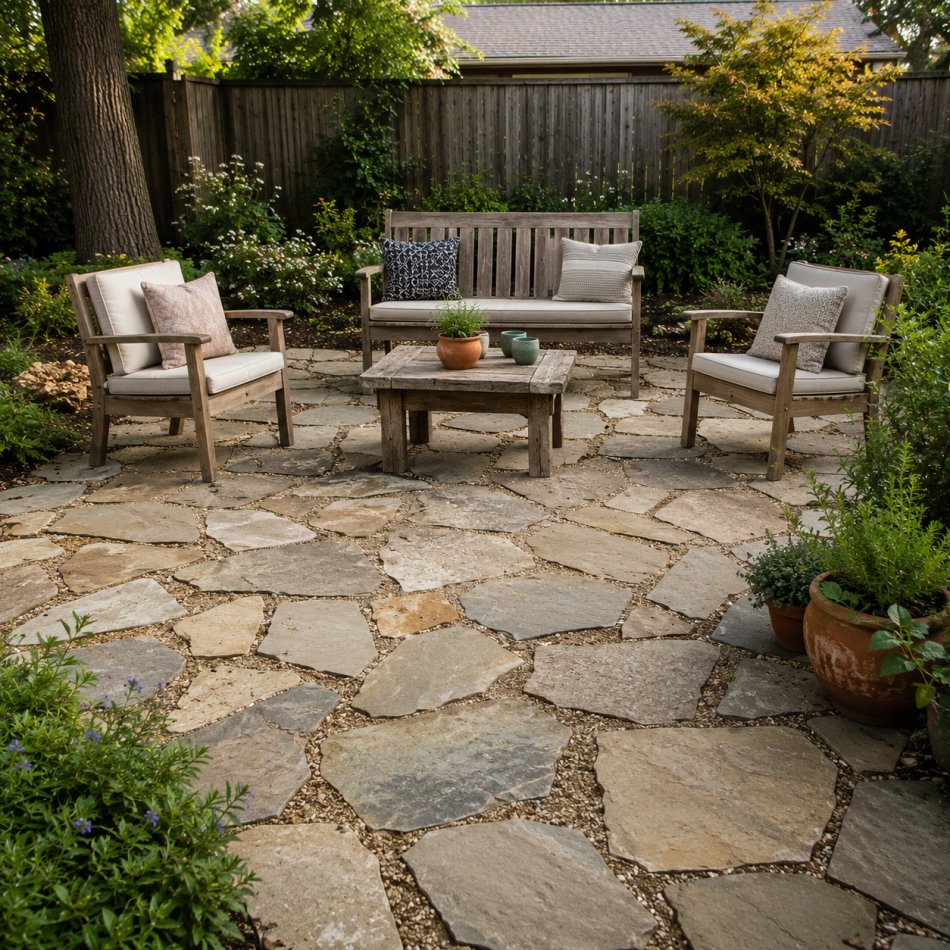
Small, irregular flagstone fragments or offcuts are often sold cheaply as scraps. Set them in sand with gravel joints for a natural stone look at a fraction of full-slab flagstone prices.
This approach works particularly well for creating a relaxed, natural-looking patio because the irregular shapes give the surface plenty of character.
You can arrange the larger fragments first and use smaller pieces to fill the gaps, helping reduce waste. Choose pieces with reasonably consistent thicknesses and compact the sand beneath them well so the finished surface feels stable and comfortable to walk on.
11. Stamped Concrete (DIY Poured Slab)
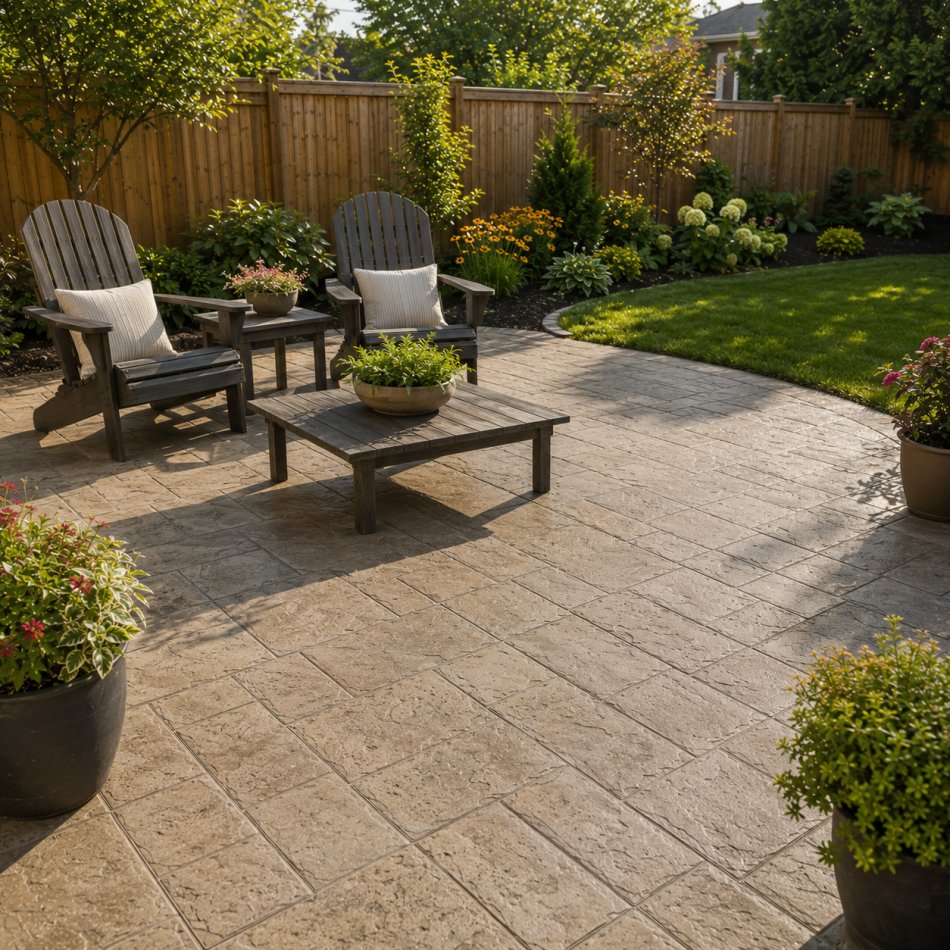
Rather than laying individual pavers, pour a single concrete slab and stamp it with a paver pattern. This can be cheaper than buying and installing hundreds of individual units, especially for larger areas.
A stamped concrete patio can also create the appearance of brick, stone, or pavers while keeping the surface continuous and easy to clean.
Choosing a simple stamp pattern and a basic finish can help control costs while still giving the patio a finished appearance. Proper preparation and curing are important, so take your time with the base and follow the concrete manufacturer’s instructions for the best results.
12. Grass and Paver Checkerboard
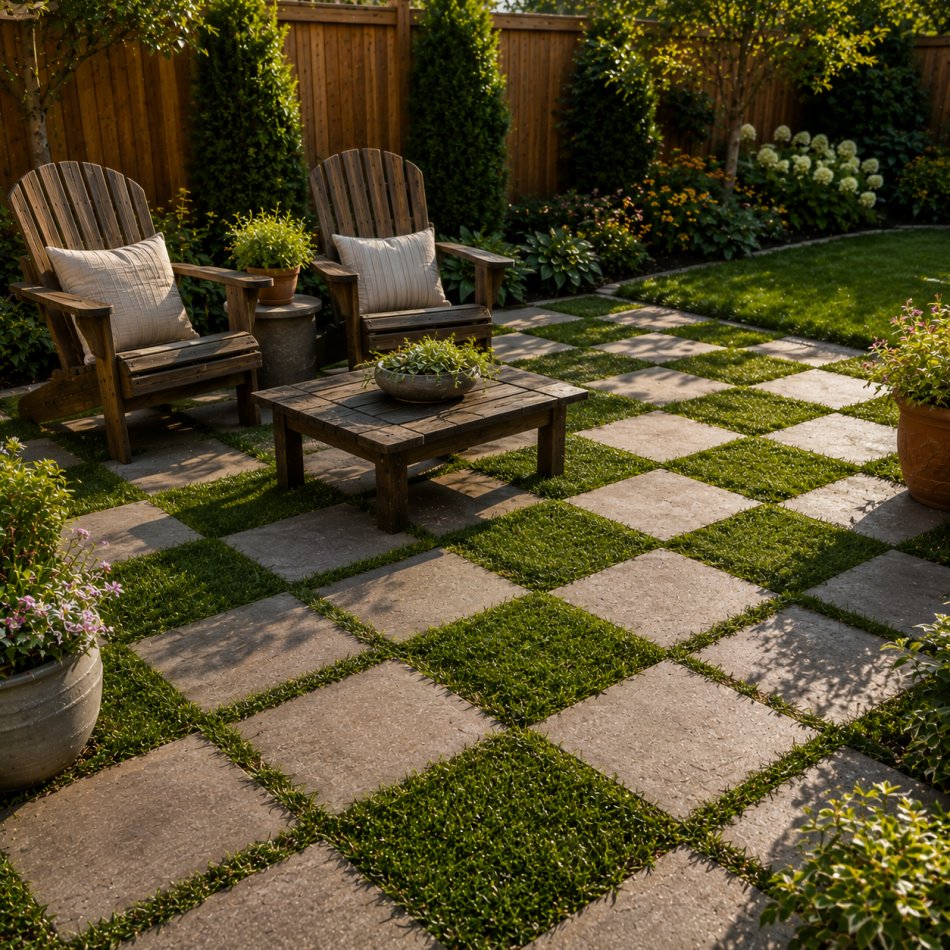
Alternate pavers with turf or ground cover squares in a checkerboard layout. Using fewer pavers per square foot immediately lowers material costs while adding visual interest.
This design can make a patio feel greener and more open while reducing the amount of hard surface you need to install. Use durable grass or low-growing ground cover that can handle regular foot traffic and your local weather conditions.
Keeping the checkerboard pattern simple and adding a few potted plants or outdoor chairs can create a stylish look without adding much to the overall budget.
13. Crushed Shell or Crushed Granite Base
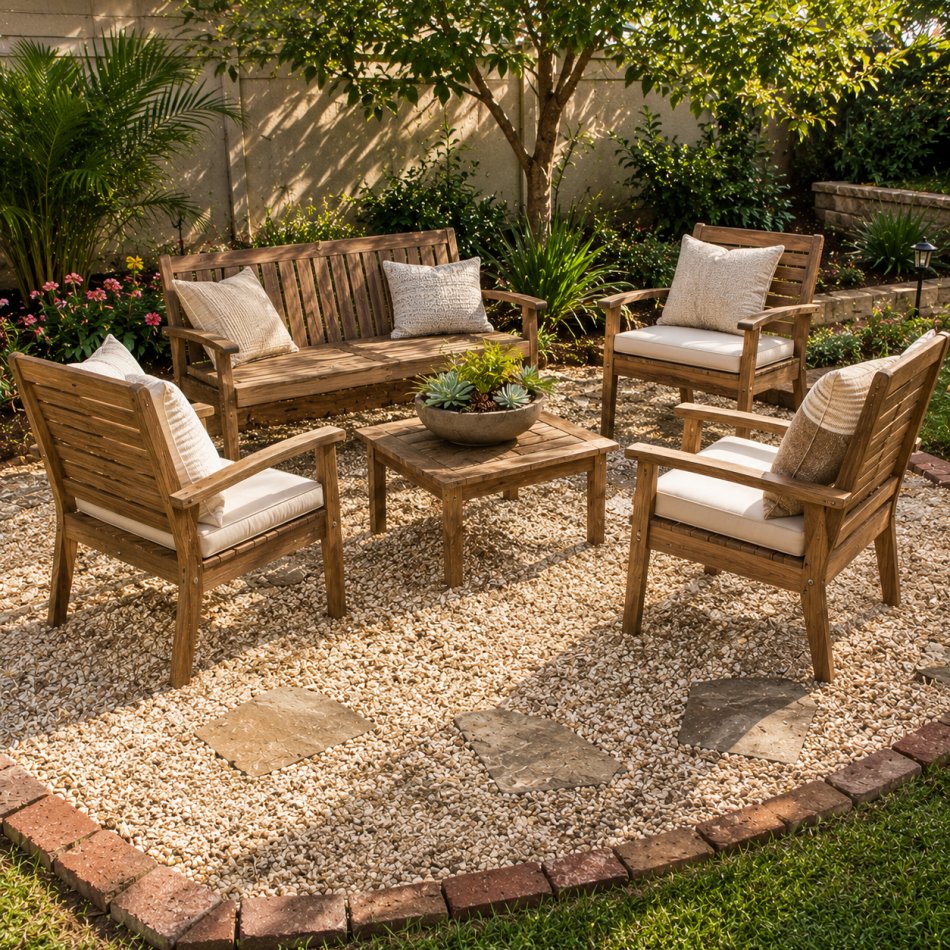
In coastal or arid regions, crushed shell or decomposed granite can serve as an ultra-low-cost surface on its own, or as filler between a minimal number of accent pavers.
These materials can give the patio a natural, textured appearance while reducing the need for expensive paving materials. They are especially useful for casual seating areas, pathways, or smaller outdoor spaces where a fully paved surface isn’t necessary.
For a more finished look, define the edges with inexpensive pavers, bricks, or landscape edging to keep the loose material contained and the patio looking neat.
14. Second-Hand Pavers from Online Marketplaces
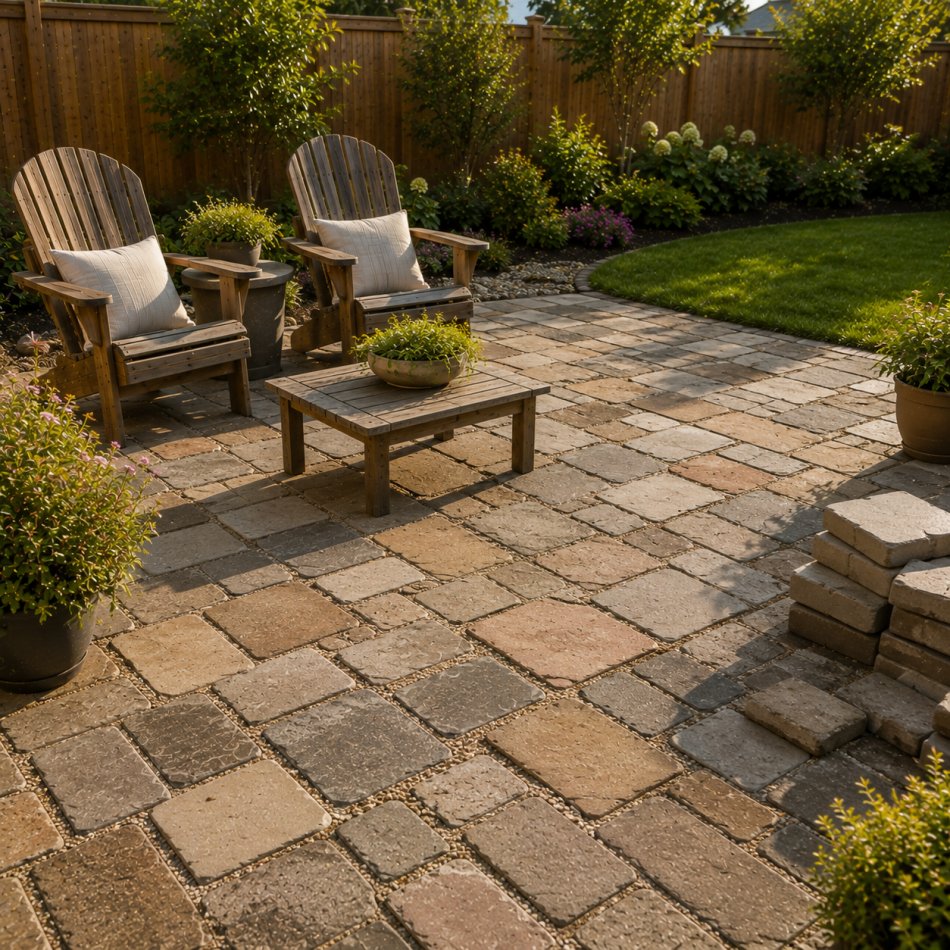
Check local classifieds, Facebook Marketplace, or Craigslist for homeowners giving away or selling leftover pavers from finished projects — often free or nearly free for pickup.
Buying second-hand pavers can be a great way to find quality materials at a much lower price, especially if you are flexible about colours, shapes, and quantities.
Before collecting them, inspect the pavers for major cracks, excessive wear, or damage and measure your patio area so you know roughly how many pieces you need. If possible, arrange to pick up enough matching pieces at once to avoid ending up with an incomplete design.
15. Mixed Material “Puzzle” Patio
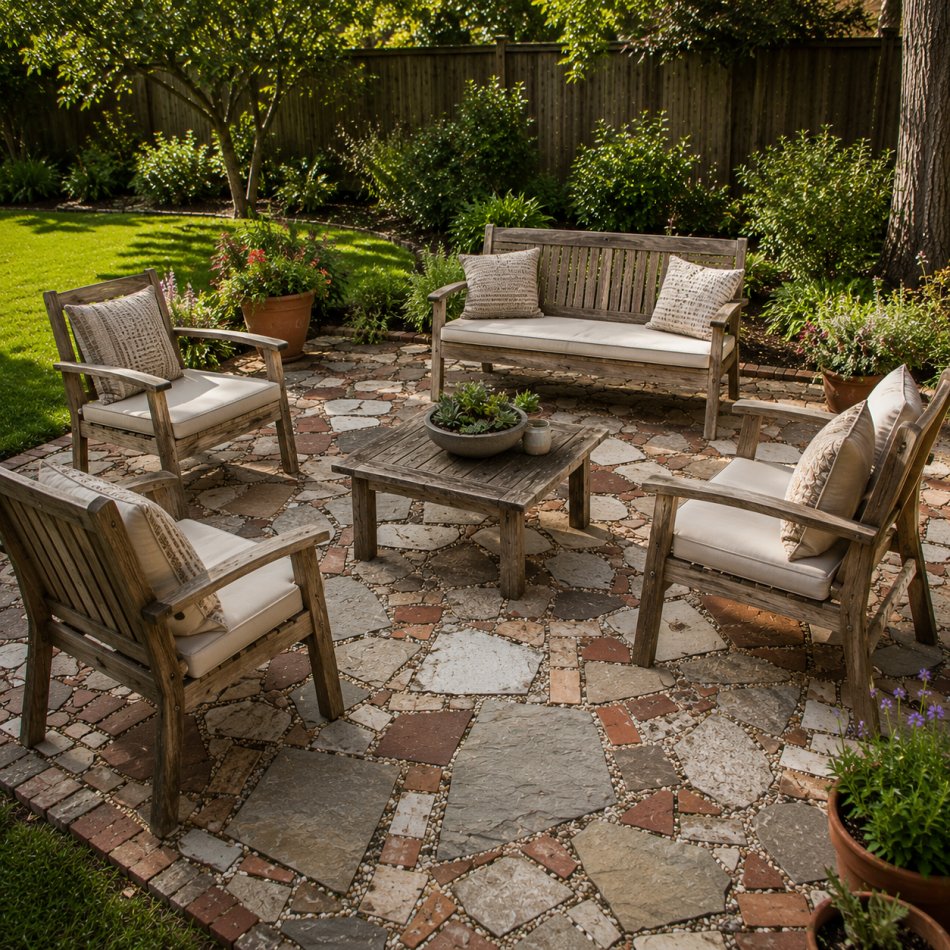
Combine leftover pavers, bricks, and broken stone from multiple sources into one eclectic patio. This uses up scrap and discount materials that would otherwise go unused.
The key to making a mixed-material patio look intentional is to repeat a few colors or textures throughout the design. You can arrange larger pieces first and use smaller fragments to fill gaps, creating an interesting puzzle-like pattern.
Keeping the edges defined with a simple border can also help the different materials look more coordinated while giving the patio a neat, finished appearance.
16. Paver Border with Mulch or Gravel Fill
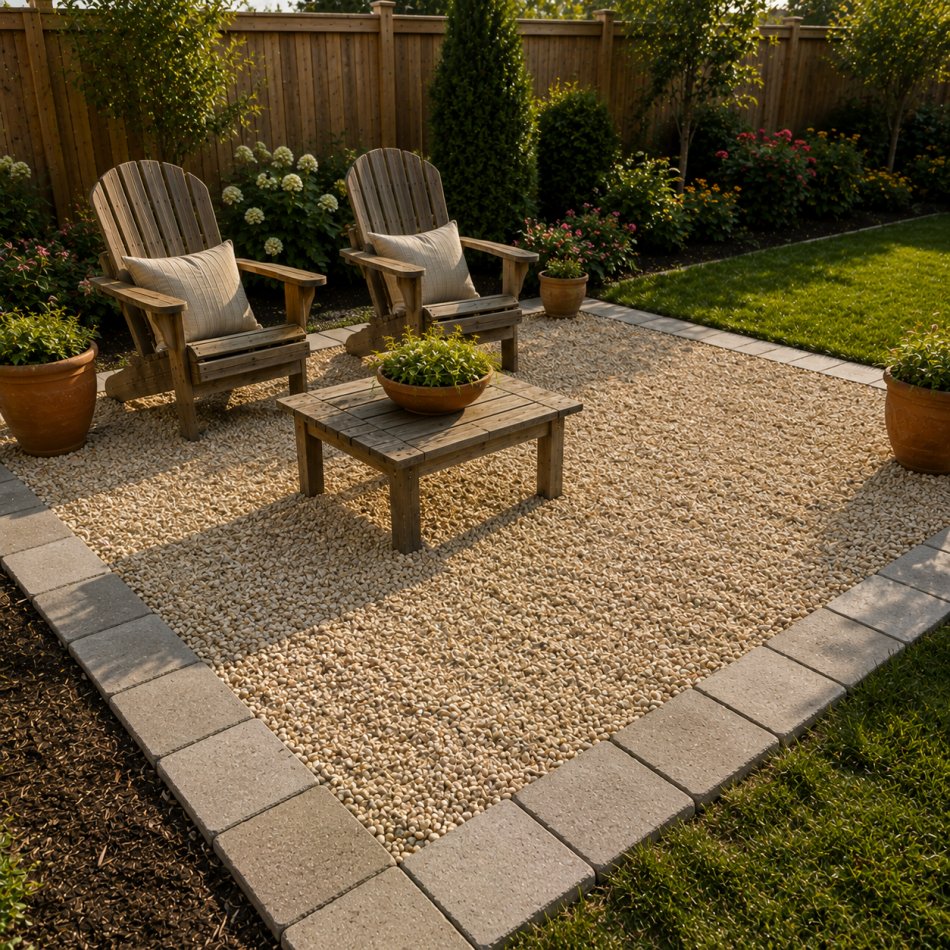
Use pavers only around the perimeter or as a defined border, filling the interior with cheap mulch or gravel. This dramatically reduces the number of pavers needed.
This approach works especially well for larger outdoor areas where a fully paved surface would be expensive. Choose simple, durable pavers for the border and use gravel or mulch that complements the surrounding landscape.
Adding a small seating area, planters, or a pathway of a few stepping stones can make the space practical and attractive while keeping material costs low.
17. DIY Concrete Paver Moulds
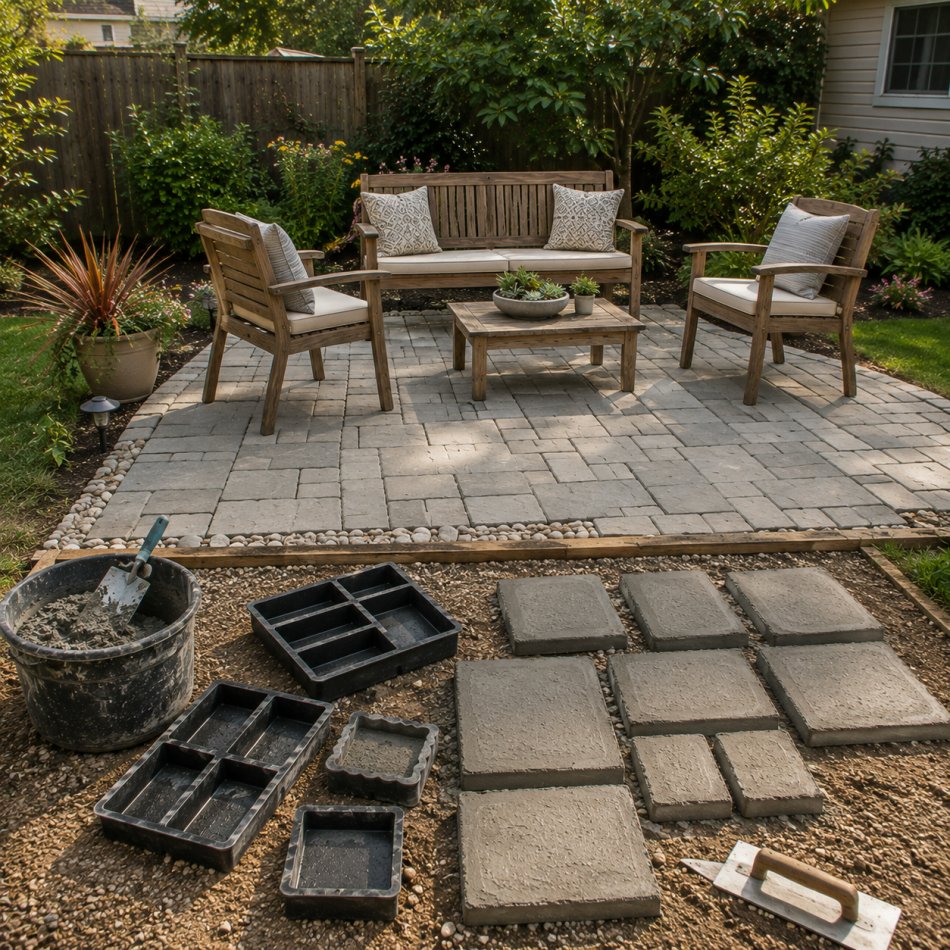
Buy or make reusable paver moulds and pour your own concrete pavers on-site. It takes more time and labour, but material costs drop close to the price of just concrete mix.
Making your own pavers also gives you more freedom to choose the size, shape, and finish that works best for your patio. You can create several batches using the same mould for a consistent look or experiment with different moulds for a more decorative design.
Allow each paver to cure properly before installing it so the finished patio has a strong and durable surface.
Conclusion
Creating an attractive patio doesn’t have to mean spending a fortune. From reclaimed bricks and broken concrete to gravel, second-hand pavers, and DIY concrete molds, there are plenty of ways to keep material costs low.
The key is choosing a style that suits your space, budget, and DIY skills. With a little creativity and careful planning, you can turn even inexpensive materials into a comfortable outdoor area that looks stylish and inviting.
Leave a Reply